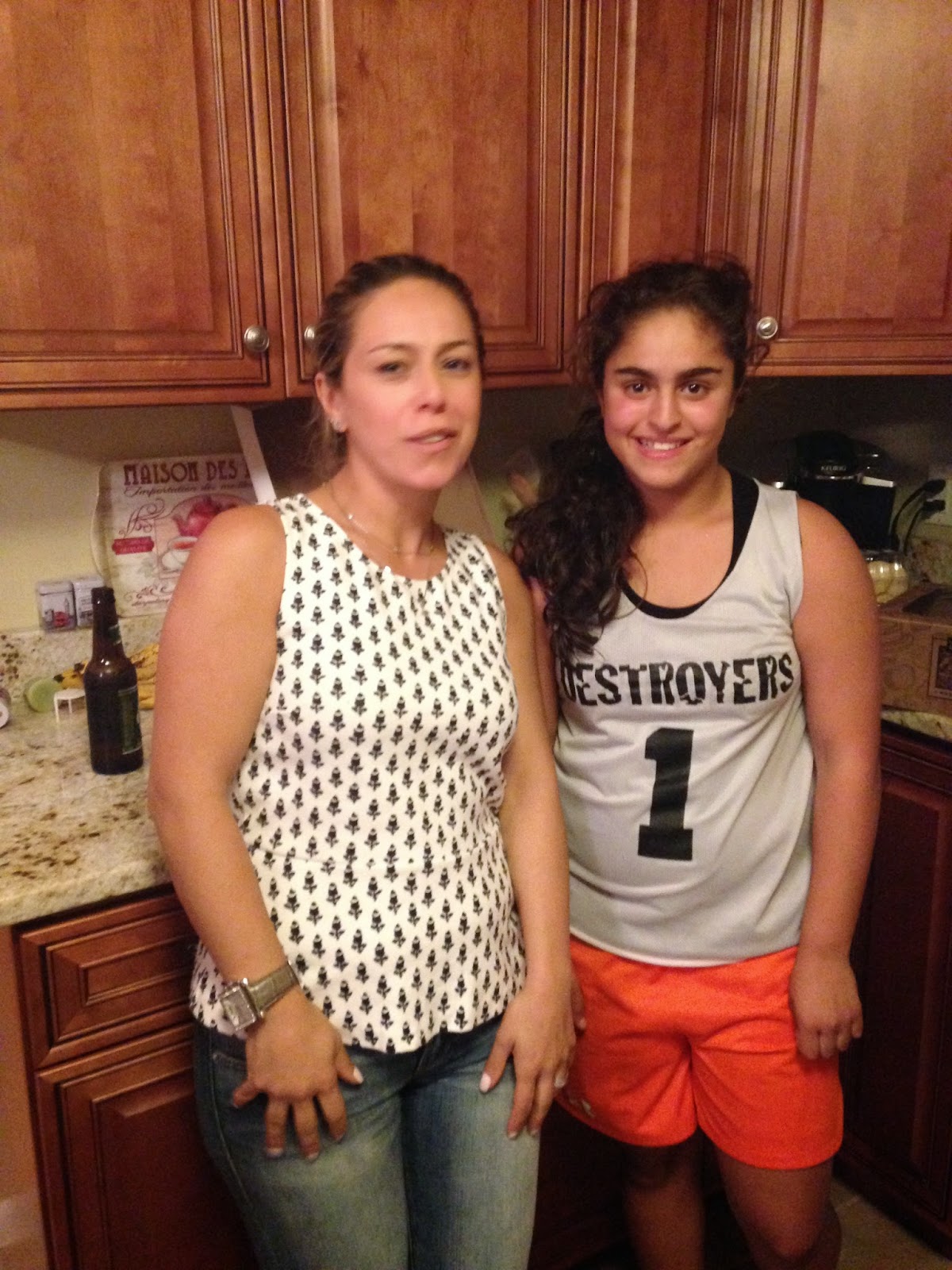
Please keep your kids playing more than just basketball. I encourage multi-sport participation for many reasons. An athlete is an athlete because they can play any sport well - with practice - and that starts early on. Playing multiple sports gives children the opportunity to develop a broad range of skills as opposed to the narrow skill set that is cultivated through single sport specialization and they learn to use their bodies in numerous ways.
Sport specialization is the year round participation and dedication to a chosen sport, at the exclusion of all other organized sports. Pretty simple. An athlete (or their parents) picks a sport and dedicates all their athletic development time to training and playing only that sport. Nothing else.
In my opinion there is only one decent argument for specializing at a young age, and, if we’re honest, it’s a darn good one.
"The more you train, the better you get."
Providing you’re working on the right things when you’re training, that’s an absolute fact that no one can argue. There is a clear correlation between time spent practicing and skill attained.
I have also heard people say that not everyone has the talent to play multiple sports regardless of how much they want to.
When I say that I want kids to play multi-sports I don't mean that they need to play every sport at a club or even a travel level. Regardless of base abilities, whatever the child may have had naturally in one sport will improved by doing other sports.
Walk away from coaches who pressure you to have your child specialize in any sport, even basketball, before late high school.
1. An offseason spent playing soccer or lacrosse or golf or dancing or gymnastic, etc., will reduce over use injuries.
2. Playing soccer, lacrosse or field hockey or any running sport will help maintain fitness and potentially enhance speed endurance.
3. Playing different sports creates a wider social group and is a fantastic way to develop social skills. Children that play two or more sports have the benefit of interacting and making friends with more children. This is especially important for basketball players as there are usually only 10 – 12 other players on the team.
The Destroyers are darn lucky to have about 20 core players of various ages.
4. Multi-sport athletes tend to develop a high level of athleticism and once they specialize late in high school or in college, they blossom in their chosen sport.
5. Multi-sport kids develop a far more useful skill: how to learn. They learn how to adapt to different situations, make connections, and to take true ownership over the improvement process.
6. They grow into well-rounded athletes who have an ability to accept different coaching styles. That helps them get a big-picture understanding that teams do things differently — philosophies, styles — and athletes must pull what they can from a coach, a style, an environment to play. The great byproduct of those differences is that it helped them in so many situations — life, sports, the classroom — to communicate differently and assert themselves
7. They understand the dynamics of being on different teams and working together as a group with a wide range of people.
8. Maybe in one sport the kid shines and is a leader. In another sport, they may not even be competent. So they learn to be humble, to be a good teammate and to support the go-to players. That is why Tayja, my talented hard working basketball player, plays lacrosse. She SUCKs at it and has to work hard at it.
Tayja did and still does a lot of different sports. Some she excels at. Others she is terrible at. At all she learns to use her body in different ways. My greatest failure is that I have never convinced her to try any type of dance and hers is that she has been unable to talk me in to letting her play tackle football.
Tayja's list of sports includes:
Fastpitch softball - pitcher, short stop, center field, third base, first base
Baseball - T, coach pitch and minor leauge
Golf
Tennis - singles and doubles
Yoga
Martial Arts - Kempo, Taekwondo, Boxing, ShitoRyu, Fencing
Juggling Rock climbing - indoor and out
Gymnastics
Lacrosse - midfielder and goalie
Soccer And Futsal
Skating - roller, inline, ice
Archery - recurve
Biking
Swimming
Rowing - single and double scull, coxed four and eight,
Boating -single kayak, canoe, rowboat, single jib sailing
Curling
Jump rope - single, group, double Dutch
Track and field - sprints, hurdles, long jump, high jump, javelin, discus
Cross country, road racing
9. Each sport teaches different skills and installs different motor patterns. Lacrosse players understand angles, footwork and how to get low on defense. They also learn to dodge and evade people who are chasing them and whacking at them with sticks. Soccer players can run all day. Those are critical skill sets for basketball players.
Volleyball and basketball each requires lateral movement, hand-eye coordination, ball skills and vertical jumping. There is a transfer between blocking a ball and contesting a shot, between moving laterally for a dig and moving laterally to prevent an offensive player’s penetration.
The lateral movement that basketball players use to stay in front of defenders is the same skill that shortstops develop to field ground balls. Softball players also learn anticipation, focusing on the pitch, reacting to the crack of the bat, and tracking the ball.
When you play multiple sports, you develop whole-body skills like balance, quickness, core strength. You cross-train skills from one sport to another. Things like spacing, vision and defensive footwork carry over from one sport to the other.
10. Kids have more opportunities to learn to manage tough losses. Sports build resilience.
11. Playing multiple sports also keeps sports and competing fresh for kids. My son, Ryan, played one sport - soccer - since age 7. To please me, he also played a little rec basketball in middle school. By junior year of high school, he had burned out on soccer, rejected all his soccer scholarship offers and attended a college which did not even have a soccer team. A player must have a burning passion to compete, to work hard and play at high level. Ryan's passion was used up before college.
Athletic development is a process, and skill development is only one piece. Each sport uses some muscles more than others. When an athlete gets in an awkward position, other sport muscles may kick in. Using general skills, a good athlete can adjust to the situation. Kids used to develop broad athletic skills by playing multiple sports and neighborhood games, like tag or dodge ball, which develop agility, balance, coordination, evading skills, body control and more. That does not happen any more.
Our team has not lost a player in over TWO
YEARS. Until now. One of the Original Eight is moving 15 hours away.
The
team came together last night to eat pizza and celebrate Celine #1 (who
went 6 for 8 on 3s in her two games this week.)
She will be missed.
The
rest of the girls are trying to figure out how to include their missing
sister in future practices via Skype.
Coach Jason DeVeau and I missed the summer league games last week to take 8 Destroyer athletes to a sleep away basketball camp on the Wheaton College campus in Norton. It is one the best basketball camps that I have attended in over 30 years.
We attended the Point Guard College Prep School, a "course is designed to give athletes a vision of who they can be as a basketball player, a student, a leader, and a person. In addition to learning everything needed to play smart, strong basketball on the court, players receive five days of training in how to be a special athlete, student, and leader."
The most important of what the girls learned, in my opinion, is how to lead themselves in to special player / a player status on the court, in the classroom and in the home. The bonus that they learned are drills and skills to defeat pressure, protect the ball and break a press.
Here is a link to a highlight video from the PGC Prep School session at Oklahoma City University from June 16-21, 2014.
http://youtu.be/HaNugbKmStA
Jason and I sign a contract pledging that we would not take any video so we don't have any of our girls. This video IS what our girls experienced.
We will be returning to the camp next year with these 8 girls and any Destroyer girls who are going in to grades 7 to 10 in the Fall of 2015 who would like to attend. Point Guard College also offers other
equally as enriching camps for older players.
Here is the link to the program:
http://www.pgcbasketball.com/courses/select-a-course/
No one wants to do it. Every player would prefer to be out on the court showcasing their talents to everyone inside the gym.
But the fact is that all players will spend a lot of time on the bench at some point. As a player progresses further in their career and makes the step up to the next level they may find themselves going from 15 minutes per game to 5 minutes per game.
If you’re only getting 5 minutes of playing time per game what are you going to do with the other 28 minutes you spend on the bench to help your team be successful?
What most people don’t understand is bench players do influence the outcome of the game greatly.
Do you know what it takes to be a great bench player? Most players I know don’t think there’s such thing as a great bench player. But there is. There really is.
“The secret is to have eight great players and four others who will cheer like crazy” – Jerry Tarkanian
Here are 5 tips you must remember to be a great bench player.
1. Bring Lots of Energy
Energy is the most important thing for all bench players to bring to every single game. Show your passion for the game.
Be loud. Shout out words of encouragement and reminders to your teammates. Stand up and cheer each time your team scores or makes a great basketball play.
When a time-out is called a great teammate will be the first one off the bench to go out and high-five the players that were on the court. When the time-out is over be energetic.
All of these little acts lift the energy and moral of the team.
Your teammates and coach will appreciate it.
2. Take Note of Your Body Language
Body language is just as important on the bench as it is on the court.
Are you leaning back, slouching, and looking disinterested? Or are you on the edge of your seat engaged in the game?
Poor body language on the bench tells a coach that you care more about yourself than the team. Prove that you’re a team-first player by having great body language on the bench.
Great teammates all sit forward, don’t slouch, and are engaged in the game.
3. Don’t Ruin Your Teammates Focus
Want to know what’s worse than a player not engaged in the game while on the bench? A player not engaged in the game that ruins the focus of their teammates.
If a player can’t stay engaged in a game this does not give them the right to ruin the focus of anyone else.
Don’t talk to them about things that aren’t related to the game, during the game. Let them focus. Save non-game related topics for after the game. No one cares what you’re planning on doing that night while the scores are tied mid-way through the fourth quarter.
4. Watch What the Opposition is Doing
While most players hate being on the bench at the start of the game, it does give you a BIG advantage over your starting opponents. By starting on the bench you have the opportunity to quickly scout your opponents.
Here are a few things you can look at if you’re a player on the bench:
1. Look for weaknesses in the defense.
If you’re a rim-attacking guard, which players on the other team have slow feet? Which players do you think you can easily beat off the dribble?
If you’re a three point shooter look for holes in their defense. What defense are they running? How can you take advantage of it?
2. What plays are they running?
Learn the names of the plays and the basic premise. Where will the ball end up? What can you do to stop it?
3. Scout your probable opponent.
If you know you usually get subbed on for a certain player, look at that players defender. What are they doing that you can exploit? Are you bigger than them and will be able to post them up? Are you quicker and will be able to take them off the dribble? Will you be able to get rebounds? How can you help your team?
Don’t wait until you’re out there to figure it out. You’ve got the advantage of watching the game from the start. A huge advantage.
5. Stay Ready
Be a great teammate on the bench by staying ready for when your number is called to go on and help your team.
When your number is called your team expects you to go on and play your part for the team. Don’t let your teammates down by not staying engaged and ready to do that.
Conclusion
Being a great bench player really comes down to being a great teammate. Being able to put team success before personal glory.
We must all remember that the players on the bench do play a big role in the outcome of the game. The intensity and moral of the players on the bench have a huge influence on the players on the court.
Put the team before yourself by following these 5 simple tips.
1. Bring lots of energy.
2. Take note of your body language.
3. Don’t ruin your teammates mental state.
4. Watch what your opponent is doing.
5. Stay ready.
And if you want more minutes on the court, becoming a great bench player will get you a step in the right direction.
When a coach looks down the bench who do you think the coach is going to substitute in; the player that’s sitting forward and looking eager to play? Or the player leaning back looking disinterested?
Robin
First Game Jitters
If you already know your vactaion schedule please forward it to
me so that I can plan ahead to make sure that we have enough players.
Last night I had 3 players from the Silver Team fill in to make sure
that we had enough subs.
Basketball games are fun. No matter our age, we enjoy testing our
skills against others. Even the youngest basketball players want to see
how they compare to other players or teams their age. Learning to
compete to the best of our ability at whatever we pursue and how to win
and lose with grace and dignity are important life lessons. But to
maximize player’s enjoyment of the game and to provide players with the
best opportunity to improve, attending practice is a must. Attending
practice is more important, in my opinion, even than attending games.
Every week that we do NOT have a Tuesday game, we will have a Tuesday practice from 7 to 9 at St Stephens.
Games
do not offer an atmosphere that is conducive to teaching. A lot of
excitement, energy, tension, interference, and distractions surround
games, making it extremely difficult to communicate any type of
teachings or lessons to a player. We have not had even one practice with
the entire team present and with summer vacations cranking up, we will
not. Please make every effort to get your girls to practice this summer.
Starters will be picked from the players who attend the practice before
the game.
Great players are skilled as a result of PRACTICE.
There isn’t a magic trick or formula, just good ‘ole hard work.
Encourage your girls to get outside working on their dribbling and
shooting everyday. The girls on the Sliver team are REQUIRED to make
10,000 baskets - on their own time - over the course of the summer. That
is MAKES not attempts. Destroyers do not count misses.
I do not
expect the Black Team to win a game this summer on the score board. Last
summer we were pleasantly surprised by winning a couple. Our wins will
be measured on effort and improvement.
The team that we played
last night is one of the top 5th grade (raising to 6th grade) teams in
the state. All the teams that we play will be top middle school teams
(both town travel and AAU teams) who have played together longer than
that 4 weeks that we have. (And keep in mind that is 4 weeks
without a single practice with every player present.)
Please tell your child after every game: "I love to watch you play."
Robin
|
Shots
Taken |
Shots
Made |
% |
3s
Taken |
3s
Made |
% |
FT
Taken |
FT
Made |
% |
Rebound |
Drives |
Defensive
Grade |
| Jazlynn |
2 |
0 |
0% |
x |
x |
x |
x |
x |
x |
2 |
1 |
B |
| Celine |
9 |
3 |
33% |
x |
x |
x |
4 |
3 |
75% |
1 |
7 |
B |
| Zaria |
3 |
1 |
33% |
x |
x |
x |
x |
x |
x |
1 |
2 |
C |
| Chloe |
2 |
1 |
50% |
x |
x |
x |
x |
x |
x |
3 |
1 |
B |
| Jomi |
5 |
0 |
0% |
x |
x |
x |
x |
x |
x |
4 |
2 |
B |
| Hannah |
DNP* |
x |
x |
x |
x |
x |
x |
x |
x |
x |
x |
DNP |
| Katie |
3 |
0 |
0% |
x |
x |
x |
x |
x |
x |
1 |
0 |
B |
| Nilijah |
DNP |
x |
x |
x |
x |
x |
x |
x |
x |
x |
x |
DNP |
| Sofia B |
4 |
0 |
0% |
x |
x |
x |
x |
x |
x |
0 |
2 |
B |
| Tayja |
DNP |
x |
x |
x |
x |
x |
x |
x |
x |
x |
x |
DNP |
| Sophia F |
3 |
1 |
33% |
x |
x |
x |
x |
x |
x |
1 |
2 |
B+ |
| Brooke |
4 |
0 |
0% |
x |
x |
x |
4 |
0 |
0% |
4 |
7 |
B |
| Selina |
5 |
4 |
80% |
x |
x |
x |
2 |
2 |
100% |
3 |
5 |
B+ |
| Gianna |
DNP |
x |
x |
x |
x |
x |
x |
x |
x |
x |
x |
DNP |
| Vienna |
11 |
7 |
64% |
x |
x |
x |
3 |
2 |
67% |
7 |
10 |
C |
| Paige |
4 |
1 |
25% |
x |
x |
x |
1 |
0 |
0% |
2 |
4 |
B |
| TEAM |
55 |
18 |
34% |
x |
x |
x |
14 |
7 |
50% |
27 |
43 |
B |
|
Shots
Taken |
Shots
Made |
% |
3s
Taken |
3s
Made |
% |
FT
Taken |
FT
Made |
% |
Rebound |
Drives |
Defensive
Grade |
*DNP = Did Not Play
Our goal is as a team this summer is to make 70% of our foul shots, 40% of our shots taken and 25% of our 3 point shots.
Everyone should have 2 rebounds per game and take at least 4 shots per game - of which 2 should be a drive.
There are 5 reasons why our players are not yet "scorers."
1.) We don't dribble well enough to get separation from our defender or to attack the basket.
We can only dribble with one hand.
We don’t know how to protect the ball in a crowd which leads to turnovers.
To combat this we work on dribbling and driving to the basket every practice. I was happy to see that all but one player drove to the basket last game. Not many of the drives were fruitful. Hunting the paint, however, is becoming the norm.
2.) We have poor shooting mechanics and poor shot selection.
To combat this we work on shooting form every practice. Everyone is getting better. I will worry about shot selection once every one is exceeding our goal of every player taking at least 4 shot attempts per game (including two drives.)
3.) We don't know how to set a screen or how to move without the ball to get open to receive the ball to score.
To combat this I am just starting to stress screening in practice. We play small side games 2 on 2 or 3 on 3 every practice to help teach movement and 1 on 1 to stress attacking in a straight line.
4.) The players don't understand how to read the defense. The small side games help with that as well.
5.) We lack the confidence to take a shot.
We think pass first not shot first.
We are afraid to attack the basket.
Since practice builds confidence, I believe that seeing make after make go in as they work the 10,000 Make Summer Challenge will help.